
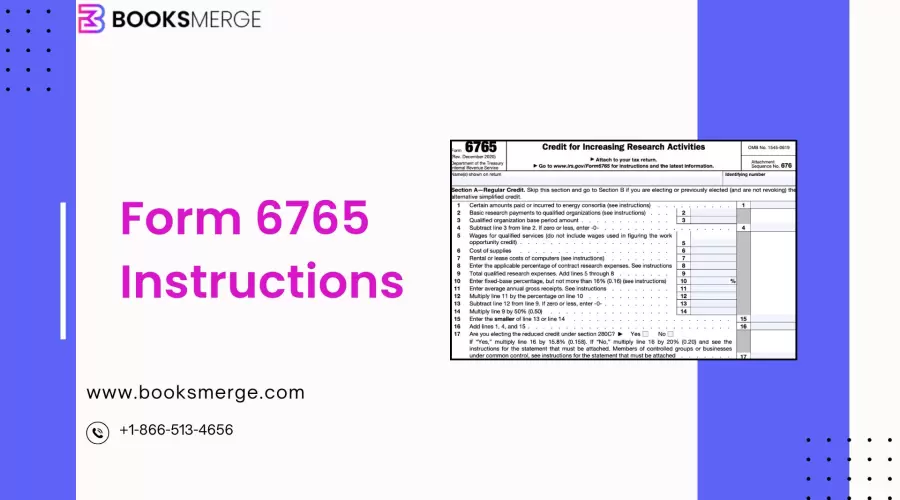
The IRS Form 6765 instructions provide the framework for claiming the Research and Development Tax Credit. Understanding these guidelines helps businesses transform their innovation efforts into substantial tax savings, fueling further growth and development.
Many business owners picture research and development as scientists in lab coats. This limited view causes countless companies to overlook a powerful tax incentive. The truth is, if your business works to create or enhance products, processes, or software, you are likely conducting qualified R&D. The key to claiming this benefit lies in mastering the instructions for Form 6765.
This credit rewards the process of innovation, not just its success. This article will serve as your practical companion to the official Form 6765 instructions 2025, breaking down the complex criteria into clear, actionable steps.
The Instructions Form 6765 outline a four part test to determine if your activities qualify. Let us translate this legal definition into real world business activities.
Your project likely qualifies if it aims to:
A critical part of the IRS form 6765 instructions is choosing your calculation method. This decision can significantly impact the value of your credit.
The Regular Research Credit
This traditional method can offer a larger credit but involves a more complex calculation.
The Alternative Simplified Credit (ASC)
Most modern businesses, especially startups and growing companies, find the ASC method more accessible and beneficial.
Read Also: IRS form list
Knowing what to count is half the battle. The Form 6765 instructions 2025 specify three primary categories for QREs.
Important Distinction: While you may pay a contractor using a Form 1099, not all 1099 payments qualify as contract research. The work itself must meet the four-part test outlined in the Instructions Form 6765.
The IRS places a heavy emphasis on documentation. Without it, even legitimate claims can be disallowed. Your records should tell the story of your R&D journey.
Essential documentation includes:
At BooksMerge, we believe the IRS form 6765 instructions are more than rules; they are a recognition of the entrepreneurial spirit. Our approach integrates tax strategy with daily bookkeeping, helping clients see their operational challenges as potential qualifying activities. We focus on building a documented narrative of innovation throughout the year, turning tax season into an opportunity to reclaim capital and reinvest in the next great idea.
The Form 6765 instructions 2025 contain a vital provision for eligible small businesses. A qualified small business can often elect to use the R&D credit to offset the employer's portion of Social Security tax liability.
The R&D tax credit is a powerful tool for any innovative company. While the instructions for Form 6765 may seem technical, their core purpose is to reward businesses for pushing boundaries. By understanding the qualifying activities, maintaining meticulous records, and choosing the right calculation method, you can successfully claim the credit you've earned. For personalized guidance, expert help is available at +1 866 513 4656.
Q1: Can I file an amended return to claim the R&D credit for a past year?
Yes, you generally have three years from the date you filed your original return to amend it and claim the credit using Form 6765.
Q2: My company is not a corporation. Can we still claim the credit?
Absolutely. The R&D credit is available to various business types, including sole proprietorships, partnerships, and S corporations.
Q3: Is there a minimum amount I need to spend to claim the credit?
There is no official minimum. The credit calculation is based on the amount and nature of your QREs, so even smaller projects can qualify.
Q4: What happens if my R&D project was not successful?
The credit is based on the research process and the expenses incurred, not on the success of the outcome. Failed experiments often yield the strongest documentation for your claim.
You May Also Visit: IRS form list

Aliqu justo et labore at eirmod justo sea erat diam dolor diam vero kasd
Welcome to Articles Webhunk, your go-to source for trending news, insightful articles, and expert opinions across various topics. Stay updated with the latest in business, technology, lifestyle, and more!
Learn More About Us© Copyright 2024 - Articles Webhunk. All Rights Reserved.